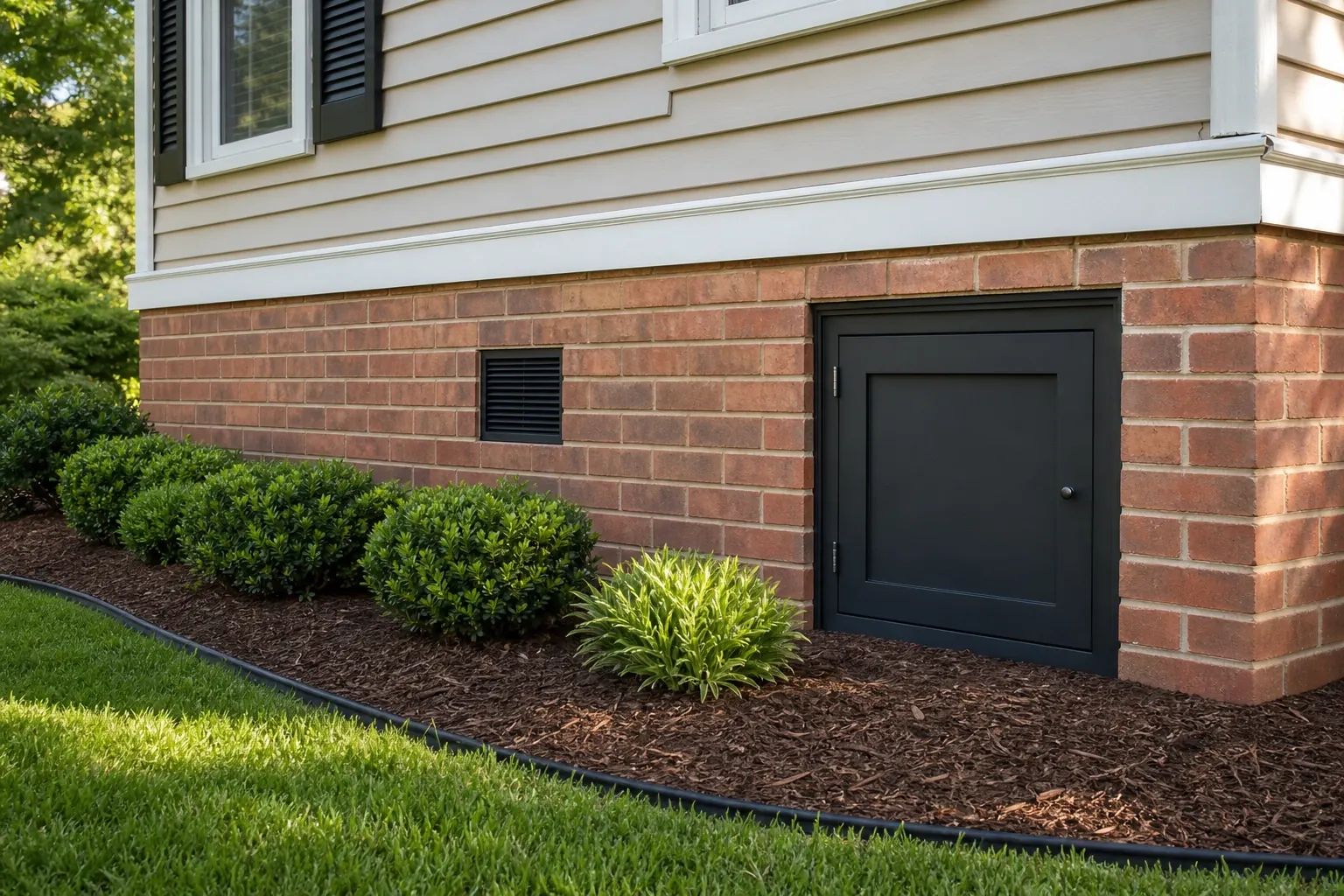
What it is
Crawl space encapsulation seals the space beneath your floor off from ground and outdoor moisture and then keeps it dry. In practice that means a heavy plastic liner covering the dirt floor and running up the foundation walls, the foundation vents closed and sealed, every gap and penetration taped, and a dehumidifier (or a supply of conditioned air) holding the humidity down. The vented dirt cavity becomes a clean, dry, semi-conditioned part of the house.
The idea isn't marketing — it came out of field research on North Carolina homes in the early 2000s (the Advanced Energy "closed crawl space" studies) that became the basis for today's building-code option to build crawl spaces sealed rather than vented.
Why crawl spaces get wet in the first place
Moisture reaches a crawl space three ways, and the right fix depends on which one you have:
- Ground evaporation. Bare soil gives off water vapor continuously. A vapor barrier blocks this.
- Humid outdoor air. In the Southeast's long cooling season, warm humid air enters through open vents and condenses on surfaces cooled by the air-conditioned rooms above. Sealing addresses this — and it's the case encapsulation is really designed for.
- Liquid water. Poor grading, gutters or a high water table put actual water on the floor. This is a drainage problem that must be fixed first — no liner or dehumidifier beats standing water.
The parts of a real encapsulation system
"Encapsulation" on a quote should mean all of these — not just the first one:
Reinforced liner (12–20 mil)
A heavy, puncture-resistant polyethylene sheet across the floor and up the foundation walls. The mil rating is the spec that matters — 12-mil reinforced is the residential standard; 6-mil sheeting is builder-grade and tears.
Sealed seams & penetrations
Overlapping sheets taped, and pipes, wiring and posts sealed where they pass through. An unsealed seam is where a 'sealed' space quietly leaks humidity.
Closed vents
Foundation vents are covered and sealed. In a humid climate, open vents let moist summer air condense on cool surfaces — the vent is the problem, not the cure.
A drying mechanism
A dehumidifier sized to the space, or conditioned supply air. Sealing without drying can trap moisture — this part isn't optional physics.
Wall termination & termite gap
The liner is fastened near the top of the wall, leaving the inspection gap Southeast termite bonds require. Running the liner to the sill can void that bond.
Insulation (often)
Rigid foam on the foundation walls rather than fiberglass batts under the floor, which sag and hold moisture in a closed space.
Encapsulation vs. vapor barrier — the confusion that costs the most
These get used interchangeably, and the mix-up is expensive. A vapor barrier is ground-cover plastic with the vents left open — it stops soil moisture from evaporating up, and runs $1,500–$4,000. Encapsulation seals the whole space and adds drying, and runs $4,000–$14,000. If humid air is your problem, a vapor barrier alone won't solve it; if the ground is your only problem, you may be paying encapsulation prices for a vapor-barrier job. Our decision guide walks through which side you're on.
What the job actually looks like
- 1 · Diagnose & drain. Confirm the moisture source with readings; fix grading/gutters and add interior drainage if water enters.
- 2 · Clean out. Remove debris and old, sagging insulation; treat any existing mold at the source.
- 3 · Line the walls, then the floor. Panels up the walls with overlapped, taped seams; piers wrapped; the termite inspection gap left at the top.
- 4 · Seal. Vents closed, penetrations sealed, rim/band area addressed.
- 5 · Dry. A sized dehumidifier with a drain line (or conditioned supply air) installed and set to hold ~55% RH.
- 6 · Verify. A humidity reading you can check yourself confirms the system works — "dry" should be a number, not a promise.
Most jobs take one to three days depending on footprint, access and how much drainage or repair is needed first.
Is encapsulation required — or just recommended?
It's almost never legally required for an existing home; it's a moisture-control choice. New construction may use a closed (sealed) crawl space to meet energy code, but for a house you already own, encapsulation is warranted when the evidence points to humid air as the source — not because a sales visit said so. Where readings are dry and there are no symptoms, the honest answer is often "monitor and revisit," not "seal now." The worth-it math, by situation →
Myths, corrected
“Encapsulation makes a crawl space maintenance-free.”
Actually: It lowers maintenance, not to zero. Check the dehumidifier's drain and filter and glance at a humidity reading a couple of times a year.
“Every crawl space needs full encapsulation.”
Actually: No. Where the moisture source is the ground (not humid air) or where liquid water enters, a vapor barrier or drainage fix can be the right, cheaper call.
“A dehumidifier alone will fix it.”
Actually: Not in a vented space — it runs forever against infinite outdoor air. Sealing is what makes drying possible.
“Sealing traps radon and makes air worse.”
Actually: A properly sealed-and-dried space usually improves the air path to the house; where radon is a concern, sub-liner venting is added during the job. Test before and after.
Frequently asked questions
▸What is crawl space encapsulation in simple terms?
It's sealing your crawl space off from ground and outdoor moisture: a heavy plastic liner across the floor and up the walls, vents and gaps sealed, and a dehumidifier (or conditioned air) to keep it dry. The result is a clean, dry, semi-conditioned space instead of a vented dirt cavity.
▸How is encapsulation different from a vapor barrier?
A vapor barrier is just ground-cover plastic with the vents left open — it blocks moisture rising from the soil. Encapsulation seals the entire space (floor, walls, vents) and adds drying. Encapsulation addresses humid air; a vapor barrier addresses ground evaporation.
▸Does encapsulation require a dehumidifier?
Effectively yes — a sealed space needs a drying mechanism (a dehumidifier or conditioned supply air), or it can end up more humid than a vented one. Treat any 'encapsulation' quote with no drying plan as incomplete.
▸Is crawl space encapsulation worth it?
It's worth it when humid air is your moisture source, especially with HVAC or ducts in the crawl space. It's usually not worth it for a dry, symptom-free space, and it's premature where standing water needs drainage first. See our worth-it guide for the situation-by-situation math.
▸How long does encapsulation last?
A quality reinforced liner lasts 15–20+ years; the dehumidifier runs 5–10. The seal itself is durable — most 'failures' are unsealed seams, a liner run to the sill, or a neglected dehumidifier drain, all avoidable with good installation and a yearly glance.
Sources & how we know
Advanced Energy — closed crawl space field studies (North Carolina)
2025–2026 contractor quotes reviewed across NC & SC (CrawlCred internal)
Ready to price it or find someone? Estimate a fair range with the cost calculator, then compare only contractors with dated checks in the verified directory.