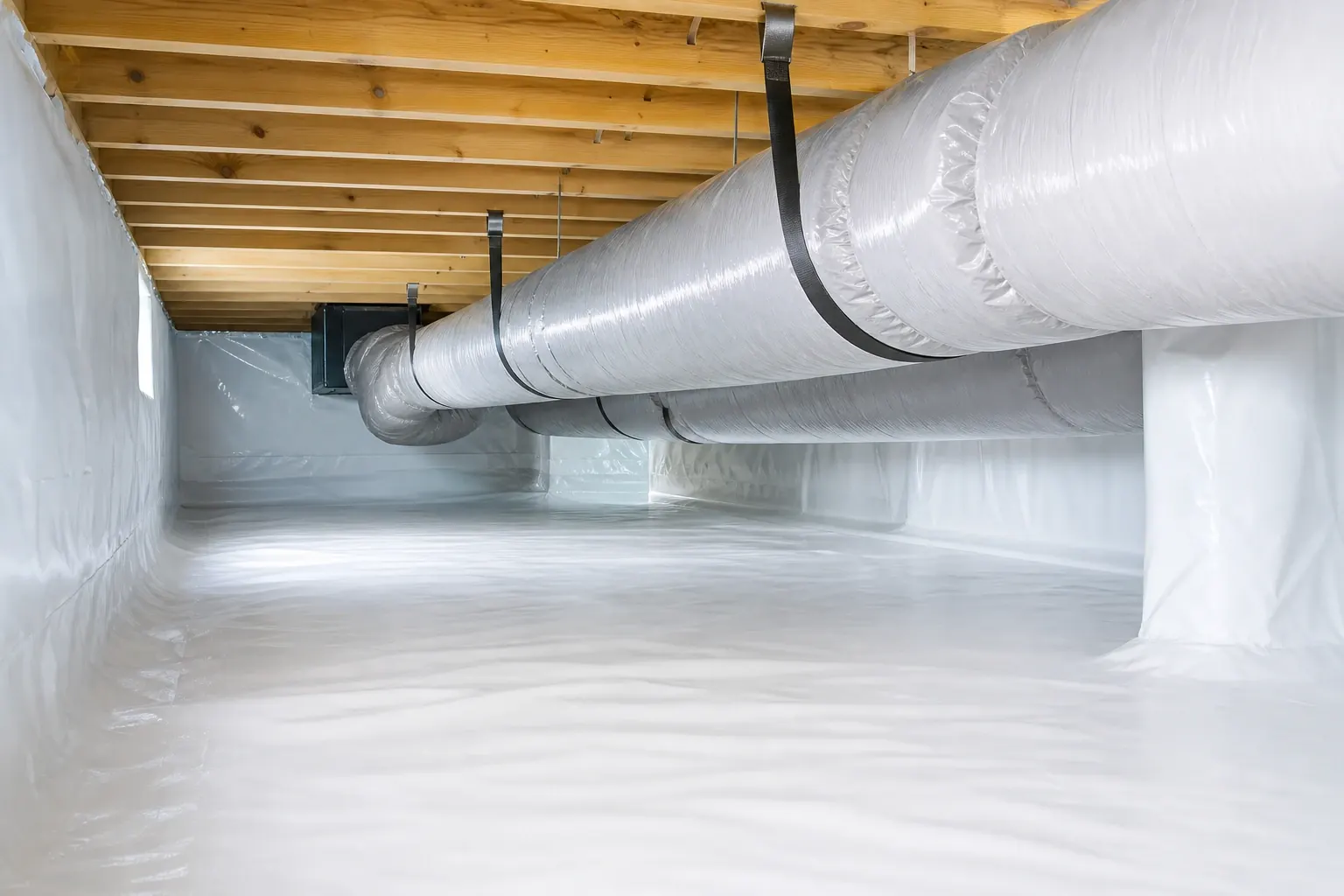
First: the case where it's pointless
A dehumidifier in a vented, unsealed crawl space is drying the neighborhood. Open vents replace the air continuously, so the unit runs nonstop against an infinite supply of humid outdoor air — high electric bills, short equipment life, no lasting change in readings. If a quote includes a dehumidifier but no air sealing, ask what keeps the dried air in. That single question reorders a lot of quotes.
Sizing by the numbers
Crawl space units are rated in pints of water removed per day. Rough guidance for a sealed Southeast crawl space:
| CRAWL SPACE SIZE | CAPACITY | UNIT PRICE RANGE |
|---|---|---|
| Up to ~1,500 sq ft | 50–70 pints/day | $900–$1,400 |
| 1,500–2,500 sq ft | 70–90 pints/day | $1,200–$1,800 |
| 2,500+ sq ft or damp conditions | 90–130 pints/day (or two units) | $1,500–$2,600 |
Installation (a level pad or hanging kit, a condensate drain line or pump, an electrical outlet if none exists) typically adds $300–$800. A residential portable from a big-box store is not a substitute — they're not rated for low-temperature, low-clearance duty and fail early under it.
Running costs, honestly
- — Electricity: a properly sized unit in a sealed space cycles rather than running constantly. Expect roughly $10–$30/month in the humid season, less in winter.
- — Maintenance: a filter rinse a couple of times a year and a check that the drain line runs clear. Ten minutes, no contract required.
- — Lifespan: quality crawl space units run 5–10 years. Warranties of 5+ years on the compressor are common — get the term in writing.
The target number on the wall
The goal isn't a machine, it's a reading: relative humidity held around 50–60%, keeping wood moisture safely below the ~19% decay threshold. A $30 hygrometer with a remote display tells you whether the system — liner, sealing, dehumidifier together — is actually doing its job. Ask the contractor which reading they're designing for; "dry" is not a number.
Whether the full scope is right for your house is the bigger question — start with is encapsulation worth it, check your numbers with the cost calculator, and run the paperwork through the free quote check.
Frequently asked questions
▸What size dehumidifier do I need for my crawl space?
Roughly 50–70 pints/day up to ~1,500 sq ft, 70–90 for 1,500–2,500 sq ft, and 90–130 (or two units) beyond that or in damp conditions — for a sealed space. Oversizing one step is cheap insurance; undersizing means it never catches up.
▸Can I use a regular home dehumidifier in a crawl space?
Not reliably. Residential portables aren't rated for the low temperatures and low clearance down there and typically fail within a season or two. Crawl-space-rated units cost $900–$1,800 and carry 5+ year compressor warranties for that reason.
▸How much does it cost to run?
A properly sized unit in a sealed space cycles rather than running constantly — roughly $10–$30/month in the humid season, less in winter. A unit that never stops is a sizing or sealing problem, not a utility fact of life.