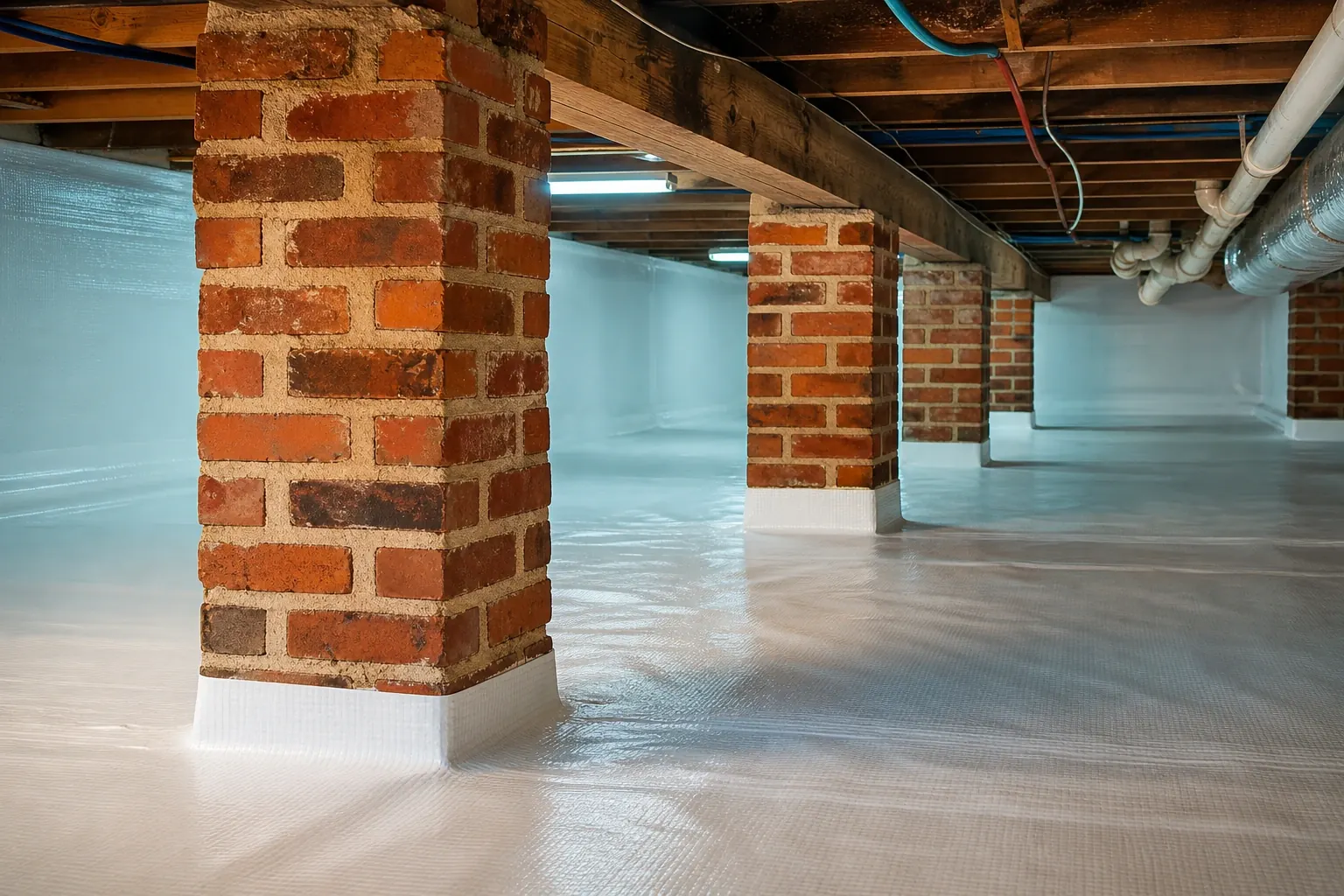
What you actually get
- — Energy: field research on North Carolina homes (the Advanced Energy closed-crawl-space studies that shaped today's building codes) measured meaningful cooling-energy reductions when vented crawl spaces were sealed and dried — largest when HVAC equipment or ducts sit in the crawl space. Treat "up to 20%" as a best case, not a promise.
- — Wood moisture: sealed-and-dried spaces hold wood moisture content below the ~19% threshold where decay fungi activate. The quiet benefit that protects the structure long-term.
- — Air quality: a large share of first-floor air rises from the crawl space. Drier space, drier air path.
- — Resale: a documented, dry crawl space removes a common inspection flag. It rarely adds its own cost back to the price, but it prevents a renegotiation.
Verdict by situation
Southeast home, HVAC or ducts in the crawl space, summer moisture symptoms
USUALLY WORTH ITYou're conditioning air that passes through a humid space. Sealing captures energy savings and protects equipment — two payback streams at once.
Humid climate, symptoms present, but ducts and HVAC are elsewhere
OFTEN WORTH ITThe wood-protection and air-quality case still applies; the energy case is weaker. Compare against a vapor barrier + drying strategy first.
No symptoms, dry readings, seller just wants the checkbox
USUALLY NOTEncapsulating a dry, healthy crawl space buys little. Spend a fraction on monitoring (a $30 hygrometer) and revisit if readings change.
Standing water shows up after rain
NOT YETLiquid water is a drainage problem. Encapsulating over it traps the problem under a liner. Fix the water path first, then re-evaluate.
Budget only covers part of the full system
PARTIAL SCOPEA well-installed vapor barrier plus drainage correction delivers most of the moisture benefit at a quarter of the price. Full sealing can come later.
The three ways the math goes wrong
- — Paying air-source prices for a ground-source problem. If ground moisture is the issue, a $2,000–$4,000 vapor barrier captures most of the benefit. See encapsulation vs. vapor barrier.
- — Sealing over standing water. Drainage first. A liner over liquid water is an expensive way to hide a problem your inspector will still find.
- — Buying the system without the drying. A sealed space with no dehumidifier or conditioned air supply can end up more humid than a vented one. Sizing and costs in our dehumidifier guide.
Run your square footage through the cost calculator for a fair local range, then compare quotes only from contractors with dated license and insurance checks. Already have a quote? Run it through the free quote check.
Frequently asked questions
▸Is crawl space encapsulation worth the money?
It's worth it when humid air is your moisture source and especially when HVAC/ducts sit in the crawl space — you get energy savings plus wood protection. It's usually not worth it for a dry, symptom-free space, and it's premature if you have standing water (fix drainage first).
▸Does encapsulation lower energy bills?
It can, most when ducts or HVAC are in the crawl space. NC field research measured meaningful cooling-energy reductions from sealing and drying vented crawl spaces. Treat vendor claims of 'up to 20%' as a best case, not a promise.
▸Will it pay for itself at resale?
Rarely as a line-item price bump — but a documented dry crawl space removes a common inspection flag and prevents a price renegotiation, which is where the money actually shows up. Keep the invoice, spec and warranty to hand to buyers.