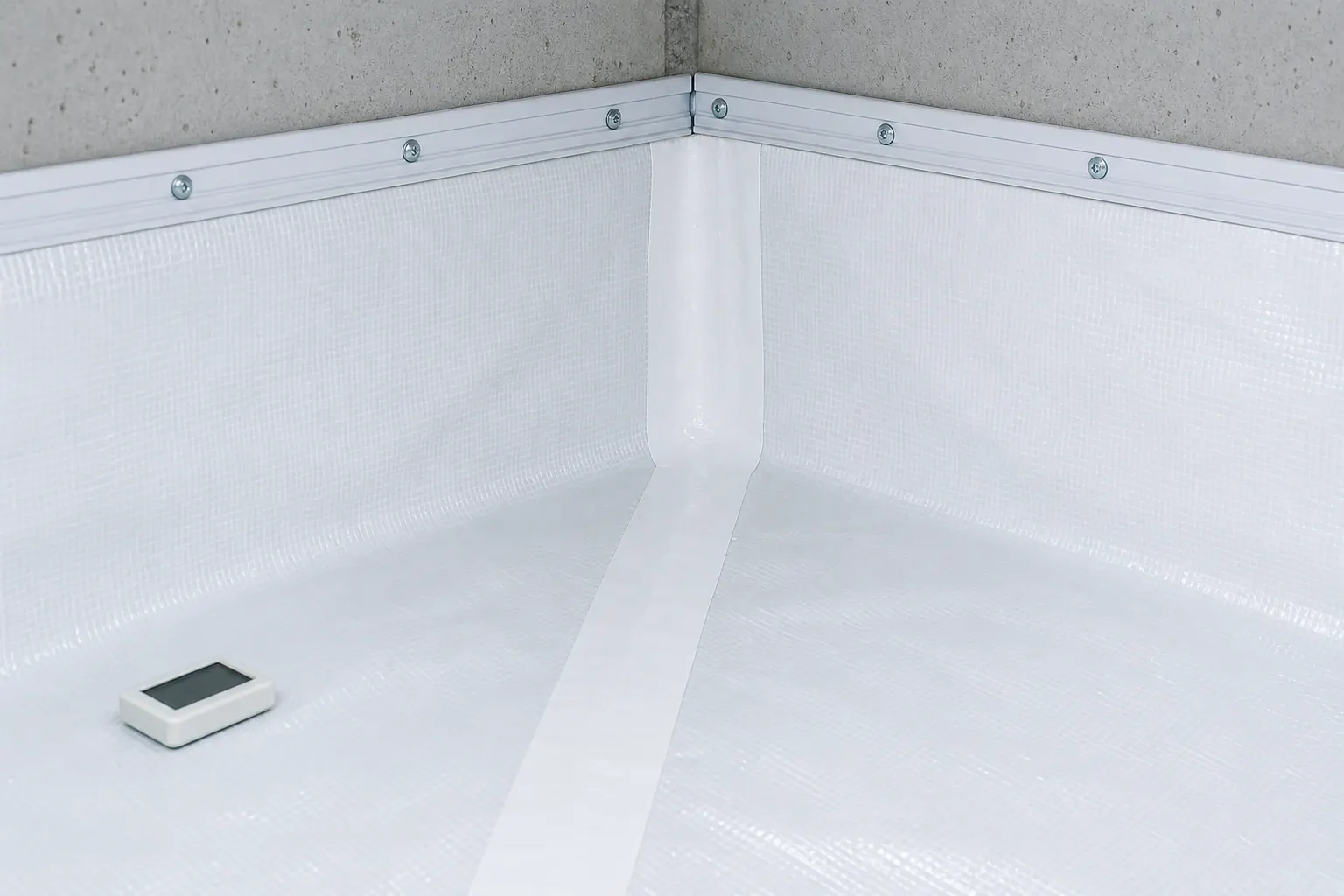
The three interventions
1. Vapor barrier (~$1,500–$4,000)
Heavy polyethylene over the dirt floor, seams overlapped and taped. Blocks ground moisture from evaporating into the space. Vents stay open. The right scope when the ground is the moisture source and the space stays reasonably dry in summer.
2. Drainage correction (~$500–$3,500)
Gutters, downspout extensions, grading — and where water still enters, interior drains to a sump pump. Not glamorous, but standing water makes every other intervention pointless. Always first when there's liquid water.
3. Full encapsulation (~$4,000–$14,000)
Thick liner across floor and up the walls, vents sealed, penetrations sealed, plus a drying mechanism — dehumidifier or conditioned supply air. Converts the crawl space into semi-conditioned space. The right scope when humid outside air is the moisture source, the common case in the Southeast's long cooling season.
A decision table you can use
| WHAT YOU OBSERVE | LIKELY SOURCE | START WITH |
|---|---|---|
| Standing water or mud after rain | Surface/ground water | Drainage — before anything else |
| Dry winter, musty summer; condensation on ducts | Humid outside air through vents | Full encapsulation + drying |
| Damp soil smell year-round, no liquid water | Ground evaporation | Vapor barrier; reassess in one summer |
| Sagging floors, soft sills | Long-term moisture damage | Structural assessment first — then moisture control |
Questions that expose a templated quote
- — "What did you measure my summer relative humidity at, and where?"
- — "Is my moisture source ground water or air? What's the evidence?"
- — "What's the drying mechanism after sealing, and who maintains it?"
- — "What happens to my termite inspection access?" (bond providers need to see the sill)
- — "Can you do the vapor-barrier-only version, and what would that cost?" — watch how hard they fight this one.
Frequently asked questions
▸Is a vapor barrier the same as encapsulation?
No. A vapor barrier is polyethylene over the dirt floor with the vents left open — it blocks ground evaporation. Encapsulation seals the whole space (floor, walls, vents) and adds a drying mechanism. They solve different moisture sources and differ roughly $2,000 vs $10,000.
▸How do I know if I need the full system?
If the space is dry in winter but musty with condensation in summer, humid outside air through the vents is your source — that's the case encapsulation is for. If it only smells of damp soil with no liquid water, a vapor barrier may be enough; reassess after one summer.
▸Do I need a dehumidifier with encapsulation?
Yes, or another drying mechanism (conditioned supply air). Sealing a space without drying it traps whatever moisture remains — the dehumidifier is what actually lowers the humidity a sealed space needs.